

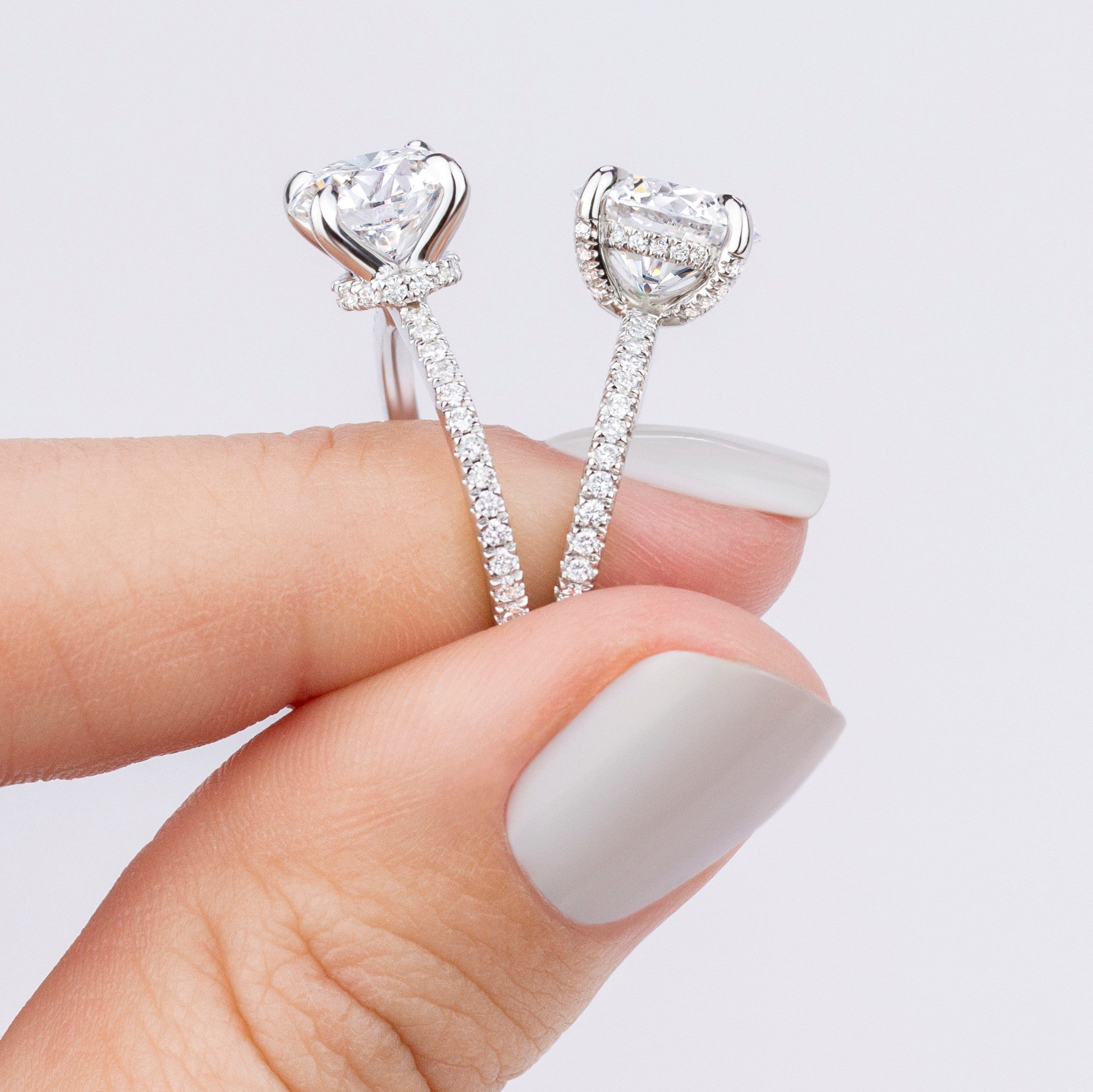
Lab-grown diamonds have become a popular choice for engagement rings and other fine jewelry, offering the same sparkle and brilliance of mined diamonds at a lower cost and with a more ethical footprint. But when it comes to the setting that holds your precious stone, the decision between platinum vs gold lab diamond rings isn’t quite as clear-cut. Both metals have their pros and cons, so let’s delve into what makes each unique to help you find the perfect match for your lab diamond ring.
Shine On: Durability and Maintenance
-
Platinum: Renowned for its strength and longevity, platinum is a natural choice for active lifestyles. Denser than gold, it’s more resistant to scratches and everyday wear. Platinum’s naturally white color won’t fade or need replating, keeping your ring looking brilliant for years to come. However, like any metal, it can develop a soft patina over time, which some find adds to its character.
-
Gold: Available in a range of colors (yellow, white, and rose), 14k or 18k gold offers a classic and timeless look. While strong, it’s softer than platinum and more prone to scratches and dents. White gold is often rhodium plated for a bright white finish, but this plating can wear off over time, requiring reapplication to maintain its shine.
Price Point: Weighing Your Options
-
Platinum: Generally more expensive than gold due to its rarity and higher purity. The price difference can vary depending on the current market value of each metal.
-
Gold: A more affordable option, especially for those who love the warmth of yellow gold or the romantic blush of rose gold.
Style and Sensitivity
-
Platinum: Its naturally white color beautifully complements the brilliance of a lab diamond, creating a sleek and sophisticated look. Additionally, platinum is hypoallergenic, making it a great choice for those with sensitive skin.
-
Gold: The versatility of gold allows you to play with different colored settings to match your taste and the undertones of your skin. However, white gold might not be ideal for those with nickel allergies, which are present in some white gold alloys.
The Final Sparkle
Ultimately, the best metal for your lab created diamonds ring comes down to your personal preferences and lifestyle. Consider how you’ll wear your ring, your budget, and the aesthetic you desire.
-
Choose platinum if: Durability and a naturally white sheen are your top priorities, or if you have sensitive skin.
-
Choose gold if: You prefer a warmer or rosier hue, are on a tighter budget, or love the classic elegance of yellow gold.
No matter your choice, a lab diamond paired with either platinum or gold creates a stunning and meaningful piece of jewelry that will sparkle for years to come.